Contents
- Quick decision: compare the product you can actually use
- Two brands, different service rules
- Follow the money from deposit to withdrawal
- Compare the actual contract, then the order
- Fees: match quantity, price, category and role
- Liquidity: price the whole order
- Resolution is not the same as money arriving
- Which should you choose?
- Common questions
Quick decision: compare the product you can actually use
For a US-dollar account, compare Kalshi with Polymarket US. For a blockchain-based account, investigate Polymarket Global—but first check its restrictions. The two Polymarket services have different eligibility, balances, fees and settlement systems. Kalshi also accepts applicants from many countries; calling it “US-only” is out of date. Your residence, physical location and account approval still matter. [1][2]
Start with Kalshi when…
You want to compare a dollar-based event-contract account, available bank/card or crypto funding, and sports, political or economic contracts. Check the exact series fee: a resting order is not always free.
Start with Polymarket US when…
You meet its US onboarding requirements and want a separate regulated dollar venue. Its standard taker coefficient is slightly below Kalshi’s general coefficient, but that alone does not establish the lower total cost.
Investigate Polymarket Global when…
You are eligible for its international service and want its on-chain market structure. Its category-dependent fees and pUSD collateral require a different comparison from the US service.
Published by HypaForecast. This guide compares Polymarket and Kalshi using official product sources checked on 15 October 2026. The calculations are illustrations; no matched live liquidity test or real-money transaction was performed.
Two brands, different service rules
| Question | Polymarket Global | Polymarket US | Kalshi |
|---|---|---|---|
| Product | International blockchain-based service | US-dollar event-contract exchange built for US residents | US-dollar event-contract exchange with international access subject to restrictions |
| Regulatory identity | Separate from the US exchange; its terms and geographic restrictions apply | QCX LLC d/b/a Polymarket US, a CFTC-designated contract market | KalshiEX LLC, a CFTC-designated contract market |
| Account and identity | Email, Google or supported wallet signup; this is not a promise of anonymous or unrestricted trading | Google/Apple signup; personal details including residential address and SSN, KYC before deposit or trade; ID/selfie may be requested | 18+, personal information and identity verification; documents may be requested |
| Trading balance | pUSD on Polygon, backed by USDC; funding asset and collateral are different | USD; a self-custody crypto wallet is not required for bank/card funding | USD; crypto deposit support does not make the contract a crypto-denominated position |
The CFTC lists Kalshi and QCX/Polymarket US as designated contract markets. That designation does not mean every resident, location or contract is eligible. It does not extend the US exchange’s status to Polymarket Global. [3]
Polymarket Global’s help and API documents describe restrictions differently, including different treatment of closing existing positions. Do not read an API distinction as permission to bypass the service’s terms. US users are directed to Polymarket US. For any other location, check the current terms and restrictions for the exact product before opening a position; an accessible page or successful signup is not sufficient. [2]
Kalshi’s Member Agreement applies restrictions to being domiciled, organized or located in listed jurisdictions, and distinguishes event-contract trading from membership or non-trading access. Its list includes, among others, India, Taiwan, Thailand, France, Italy and the UAE. “Available internationally” therefore does not mean available everywhere. This article reports the published terms, rather than deciding your legal eligibility. [4]
Follow the money from deposit to withdrawal
Kalshi: US funding options include ACH, debit card, PayPal, Venmo, Cash App deposits, crypto and wires, subject to account availability. International users have card, crypto and wire deposit routes; ACH, PayPal, Venmo and Cash App are unavailable for those accounts. International withdrawals use card or crypto. Security holds can make the balance available to trade different from the balance available to withdraw. [5]
Polymarket US: documented app routes include debit card, ACH, Apple Pay, PayPal, Venmo, USDC on iPhone where available, and wires. Funds must come from accounts in your name. Instant buying power may be provided before a deposit clears; that does not make it immediately withdrawable. The withdrawal guide gives typical card/ACH arrival of 3–4 business days and requires cleared deposits and return to the original funding source. Wire withdrawal requires support. [6]
Polymarket Global: supported tokens and deposit networks route into its trading balance; pUSD is the collateral layer on Polygon. Email or Google signup means you do not have to arrive with an external wallet, but the on-chain account and transfer risks remain. Check the deposit screen’s token, network, address, minimum and conversion quote. Network, bridge, on-ramp and off-ramp costs can outweigh a small difference in trading fees. [7][8]
Compare the actual contract, then the order
All three services cover more than one topic. Polymarket US’s current guide lists sports, politics, crypto, economics, weather, tech and culture; it is not simply a sports-only version of Global. Polymarket Global’s categories include sports, politics, crypto and financial or world events. Kalshi offers sports, political, economic and other event markets. A category label does not establish that the same event, expiry or payout is available on both platforms. [9]
For sports, check the league, winner/spread/total or player-prop definition, overtime, postponement and cancellation rules. For crypto, match the reference index and observation window. For politics or macro data, match the named source, certification/revision policy and determination time. Two similar headlines can represent different outcomes.
A limit order controls your price but may not fill. An immediately marketable limit order can take liquidity and incur taker fees: “limit” is not a fee category. Kalshi documents limit purchases and sales; Polymarket US documents market and limit orders with GTC, GTD, IOC and FOK choices. Global has an order-book workflow too. Available controls can differ between retail apps and APIs. [10]
Early exit means finding a matching trade to close your position while trading is available. It is not a guaranteed cash-out button, and a sale can realize a loss. Compare order preview, partial fills, cancel controls, depth, market rules and withdrawable balance in the app or website you would use. No hands-on app speed or usability winner is assigned here.
Fees: match quantity, price, category and role
Let C be the number of $1 binary contracts/shares and p the execution price from 0 to 1. These are coefficients in a formula, not flat percentages of the money you spend. Sources checked 15 October 2026. [11]
- Kalshi general taker:
M × 0.07 × C × p × (1 − p), with multiplierM=1unless the series specifies otherwise. Maker fees usually default to zero; listed maker-fee series useM × 0.0175 × C × p × (1 − p). Combos and other exceptions require their own schedule. - Polymarket US standard taker:
0.0695 × C × p × (1 − p). Table tennis uses0.10; combos use a different curve. Standard maker rebate coefficient is−0.0125before the scheduled 19 October change; combos have no maker rebate. Fees use nearest-cent half-even rounding, with special aggregation adjustment for multi-fill taker orders. - Polymarket Global taker:
C × feeRate × p × (1 − p). Published category coefficients include crypto0.07, sports0.05, politics/finance0.04and geopolitics0. Makers are not charged; rebate programs have separate conditions. Fees are calculated in USDC and rounded to five decimals. The smallest nonzero fee is 0.00001 USDC; very small trades can round to zero. Check market-specific parameters.
Scheduled change: Polymarket US announces volume-tiered maker and taker rebates from 19 October 2026 at 1:00 PM ET; the standard taker coefficient is unchanged. The extra weekly crypto maker rebate ends on 15 October at 8:00 AM ET. The example below excludes every rebate and promotion, so it does not assume you qualify for one.
| Price p | Position cost | Kalshi general M=1 (USD) | Polymarket US standard (USD) | Global crypto (USDC) | Global sports (USDC) | Global politics (USDC) |
|---|---|---|---|---|---|---|
| 0.10 | 20 | 1.26 | 1.25 | 1.26 | 0.90 | 0.72 |
| 0.50 | 100 | 3.50 | 3.48 | 3.50 | 2.50 | 2.00 |
| 0.90 | 180 | 1.26 | 1.25 | 1.26 | 0.90 | 0.72 |
For example, 200 × 0.0695 × 0.50 × 0.50 = 3.475, rounded half-even to $3.48. Kalshi’s selected results already lie exactly on a cent, so its rounding does not change these rows. Its PDF wording about “centicent” rounding and the displayed cent-rounded examples do not fully agree; for other quantities, rely on the current order quote rather than extrapolating the table. USD≈USDC is assumed solely for this arithmetic illustration: conversion costs, depegging and access differences are not removed.
If the same 200 units are bought at 0.50 and sold at 0.60 as a taker in two single fills, gross trading gain is 20. Kalshi’s general fees are 3.50 + 3.36 = 6.86, leaving 13.14 USD. Polymarket US fees are 3.48 + 3.34 = 6.82, leaving 13.18 USD. Global crypto gives 13.14 USDC, sports 15.10 USDC and politics 16.08 USDC. These are hypothetical net trading gains before funding, withdrawals, conversion, spread, slippage, taxes or rebates—not achievable return promises.
Kalshi’s schedule lists no settlement or membership fee, no ACH deposit/withdrawal fee and card deposit fees up to 2%; other rails and third-party intermediaries may charge. Global lists no Polymarket USDC deposit/withdrawal fee, while external providers may charge. Polymarket US describes cash withdrawals as free. Always compare the complete payment quote and your route, including any bank or network cost. For the wider cost framework, see prediction market fees.
Liquidity: price the whole order
There is no supported liquidity winner in this comparison. Aggregate volume counts previous trading; it does not tell you what you can execute now. The spread is the best ask minus best bid, while depth is the quantity available at successive prices. Neither the last trade nor the top ask guarantees your full-order average.
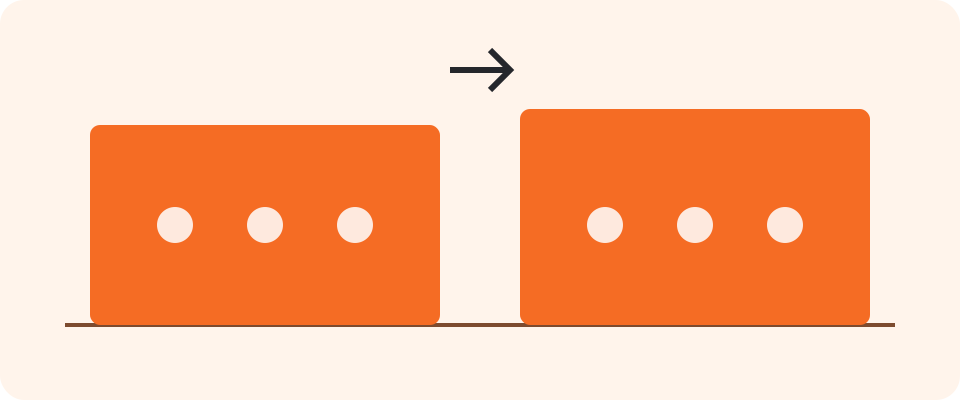
In that illustration, the first 100 shares cost 50 and the next 100 cost 54. Paying the top displayed 0.50 for the full 200 would have cost 100, so walking the book adds 4 before fees. That exceeds the 0.02 USD difference between the midpoint entry-fee examples above. It does not prove either platform has this book.
To compare execution fairly, match the event definition, payout, side, quantity and timestamp; record bids, asks, cumulative depth, expected average fill and both fee schedules. Recheck exit depth too. A lower fee can lose its advantage if the contract price is worse or the order cannot fill. The broader platform comparison explains other selection criteria.
Resolution is not the same as money arriving
Polymarket Global describes UMA’s optimistic-oracle proposal and dispute process. Polymarket US uses its exchange’s contract rules and named sources, with clearing after the outcome is finalized. Kalshi determines outcomes using each contract’s stated rules and source. Do not apply Global’s oracle process to the US service. [12]
Standard winning binary contracts pay 1 and losing ones 0, but special cancellation or alternative-settlement terms can change that. Closing time, outcome determination, balance credit and external withdrawal arrival are separate stages. A postponed sports event or delayed official release can change timing. Read the complete rules before treating two markets as interchangeable.
A purchased binary position can lose its entire purchase cost plus fees. Regulation, a stablecoin balance or a well-known brand does not guarantee a profit, uninterrupted execution or immediate receipt. A contract you can buy but cannot exit at an acceptable price may not fit your trading style.
Which should you choose?
Shortlist the eligible product first. Then choose one actual contract, one order size and the funding/withdrawal route you expect to use. Compare both entry and exit previews and read the resolution rule. Kalshi may suit a dollar workflow with the relevant markets and transfer methods; its series exceptions and holds still matter. Polymarket US offers another dollar exchange with distinct fees and rebates; its app, eligibility and contract list must fit you. Global may suit eligible users seeking an on-chain workflow, but its restrictions, collateral and transfer risks are part of that choice.
If none of the eligible services meets those conditions, skip that trade. If your next question is a wider shortlist, use the separate Polymarket alternatives or Kalshi alternatives guide.
Common questions
Is Polymarket cheaper than Kalshi?
It depends on which Polymarket product, category, maker/taker role, order size, fill prices and payment route you mean. The standard US taker coefficient is slightly lower; Global uses category coefficients. Neither fact establishes the lowest all-in cost.
Can I use both from outside the United States?
Kalshi accepts applicants from many countries subject to its Member Agreement. Polymarket US is built for US residents, while Global applies separate restrictions. Language support, signup and browsing do not establish permission to trade from your residence or current location.
Do I need a crypto wallet?
Not for Kalshi or Polymarket US bank/card funding. Global supports email and Google signup as well as wallet login, but its account, collateral and transfers remain blockchain-based.
Can I sell before the event ends?
Potentially, while the market and your account permit trading and a buyer matches your order. There is no guaranteed fill, price or instant withdrawal.
Explore HypaForecast markets
Browse the market list, or inspect the question and current round details for the 5-minute and 15-minute BTC markets.
Sources and method
Official product sources checked 15 October 2026. Examples assume standard $1 binary units. No live liquidity benchmark, hands-on app comparison or real-money action was performed. Fees and eligibility can change; check the exact product and contract.
- docs.polymarket.us / what-is-polymarket-us · polymarket.com / transparency
- docs.polymarket.com / geoblock · help.polymarket.com / 13364163-geographic-restrictions · help.kalshi.com / 14026044-international-access-eligibility
- www.cftc.gov / 49571 · www.cftc.gov / 42993
- kalshi.com / kalshi-member-agreement.pdf · help.kalshi.com / 13823778-signing-up-as-an-individual · docs.polymarket.us / signup
- help.kalshi.com / 13823791-transfers-faq
- docs.polymarket.us / fund-account · docs.polymarket.us / overview
- docs.polymarket.com / how-to-deposit · docs.polymarket.com / how-to-signup
- docs.polymarket.com / pusd · docs.polymarket.com / v2-migration
- docs.polymarket.us / browse · kalshi.com / kalshi.com · polymarket.com / polymarket.com
- help.kalshi.com / 13823811-limit-orders · help.kalshi.com / 13823815-limit-order-sale · docs.polymarket.us / orders · docs.polymarket.com / overview
- docs.polymarket.com / fees · docs.polymarket.us / fees · kalshi.com / fee-schedule · kalshi.com / kalshi-fee-schedule.pdf
- docs.polymarket.com / how-are-markets-resolved · docs.polymarket.us / market-resolution · docs.polymarket.us / contract-settlement · help.kalshi.com / 13823826-market-outcomes
Share this guide